For years, fiberglass pools have remained one of the most durable, efficient, and low-maintenance options available. Built using advanced manufacturing techniques and high-grade marine materials, each pool is handcrafted for long-lasting strength, beauty, and performance.
FAST INSTALLATION
The most time-consuming part of any inground pool project is building the pool shell itself. Fiberglass pools arrive on-site fully manufactured and ready for installation, reducing construction time by weeks compared to traditional concrete pools.
EASY OPERATION & LOW MAINTENANCE
Fiberglass pools feature a smooth, comfortable interior surface that is gentle on skin and swimsuits while helping reduce algae growth and chemical usage. Unlike vinyl liner pools, there are no liners to replace, and unlike concrete pools, there is no need for resurfacing, acid washing, or recoating.
UNIQUE FEATURES
Many fiberglass pool designs include:
Built-in entry steps
Swim-out seating areas
Non-skid textured floors and steps
Optional mosaic tile designs
Decorative waterline tile
Built-in waterfalls
LED underwater lighting
NO CLEAR-COAT SURFACE
Premium solid-color marine finishes are designed for long-term durability and color consistency. Unlike clear-coat surfaces that may yellow, fog, or break down over time, high-grade marine finishes maintain their appearance and are easier to maintain and repair.
HIGH-GRADE MARINE MATERIALS
Built using premium marine FRP resin systems, fiberglass pools deliver exceptional consistency, durability, and structural integrity. Exterior shell colors remain uniform without excessive fillers or inconsistent dye variations.
HAND-LAID CONSTRUCTION
Each pool is carefully crafted using hand-cut and hand-laid fiberglass materials for maximum strength and precision. This advanced lamination process creates a cleaner, smoother, and more durable shell compared to lower-grade spray or chop-glass manufacturing methods commonly used in the industry.
ENGINEERED FOR STRENGTH
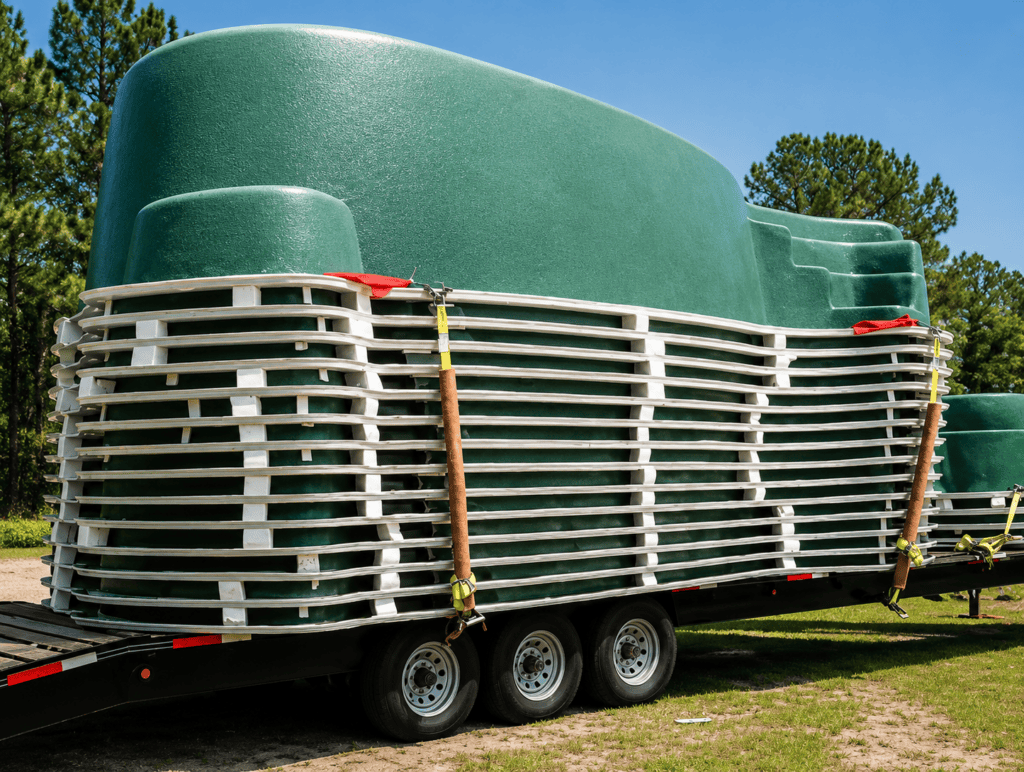
The structural design and reinforcement process allow the pool shell to maintain its shape during transportation and installation without the need for excessive external support systems.
WARRANTY PROTECTION
Fiberglass pool shells are backed by a structural warranty for long-term peace of mind. Additional surface warranties may also apply depending on the selected model and installation.
The Big Decision — Choosing the Right Pool Material
If you’re thinking about installing an inground pool, you’ve probably already imagined summer afternoons floating with a cold drink or watching the kids cannonball into the deep end. But before any of that happens, you’ll need to decide which pool material is right for your backyard: fiberglass, vinyl, or concrete .
On paper, all three can seem like solid choices. The real difference shows up years later, when one pool still looks great with minimal upkeep while another begins demanding more maintenance, repairs, and expense. Here’s the honest breakdown.
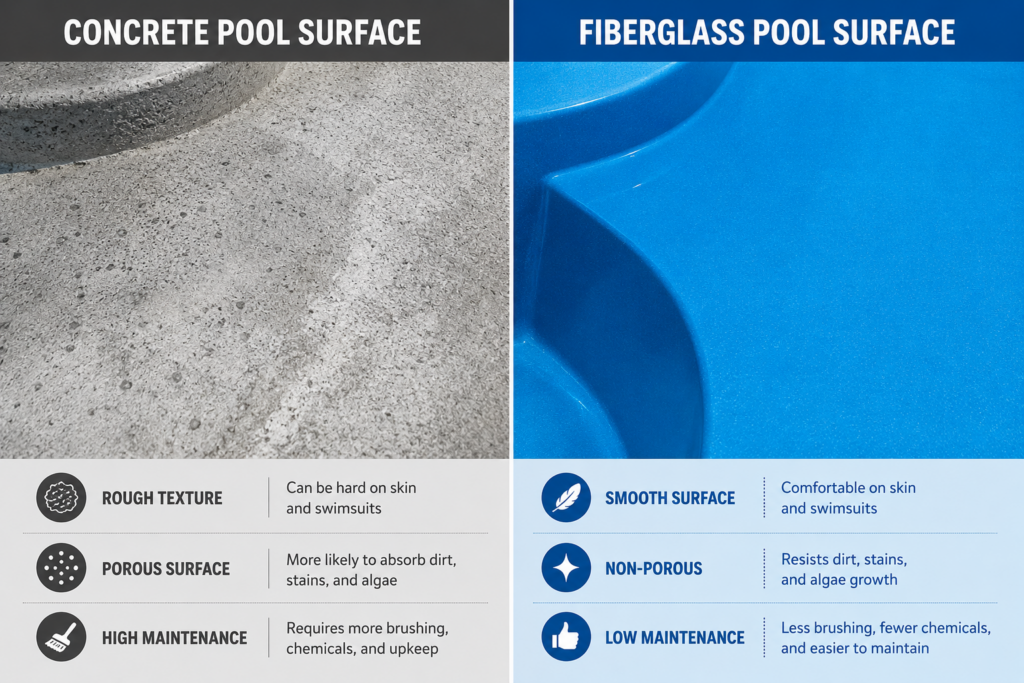
One of the biggest advantages of a fiberglass pool is the feel of the surface underwater. Concrete pools have a rough finish, while fiberglass offers a smooth, comfortable surface without becoming slippery like vinyl liners.
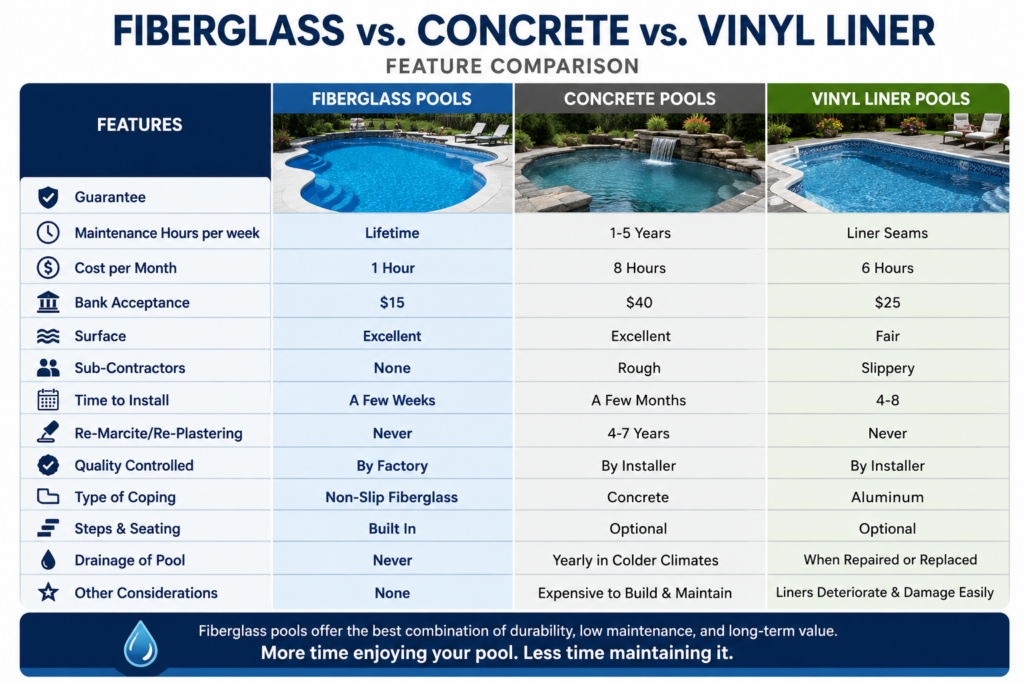
Beyond surface texture, there are several important differences between fiberglass, concrete, and vinyl-lined pools.
Fiberglass Pools: Benefits & Considerations
Fiberglass pools are manufactured in a factory as one solid shell and delivered directly to your home. Because the shell arrives pre-built, installation is much faster than traditional pool construction — often completed within just a few weeks.
Fiberglass pools are also known for their low maintenance. The smooth, non-porous surface resists algae growth, helping reduce chemical use and cleaning time. The finish is comfortable underfoot, won’t snag swimsuits, and does not require resurfacing or liner replacements.
Some homeowners assume fiberglass limits design flexibility, but modern fiberglass pools are available in a wide variety of shapes, sizes, colors, tanning ledges, spas, and water features. For most families, there are more than enough options to create a customized backyard experience.
Vinyl Pools: Benefits & Considerations
Vinyl pools often attract homeowners because of their lower upfront cost. A vinyl liner stretches across a framed structure, creating a smooth surface that allows for flexible shapes and layouts.
However, vinyl liners are more delicate than fiberglass or concrete. Sharp objects, pets, or years of sun exposure can lead to punctures, fading, or full liner replacements every 7–10 years. While the initial price may be lower, maintenance and replacement costs can add up over time.
Concrete Pools: Benefits & Considerations
Concrete pools are known for nearly unlimited customization. They can be built in almost any shape or depth, making them a popular option for highly customized luxury designs.
The tradeoff is maintenance and installation time. Concrete pools can take months to complete and require frequent brushing, chemical balancing, and resurfacing over time. Their porous surface encourages algae growth, increasing long-term upkeep and operating costs.
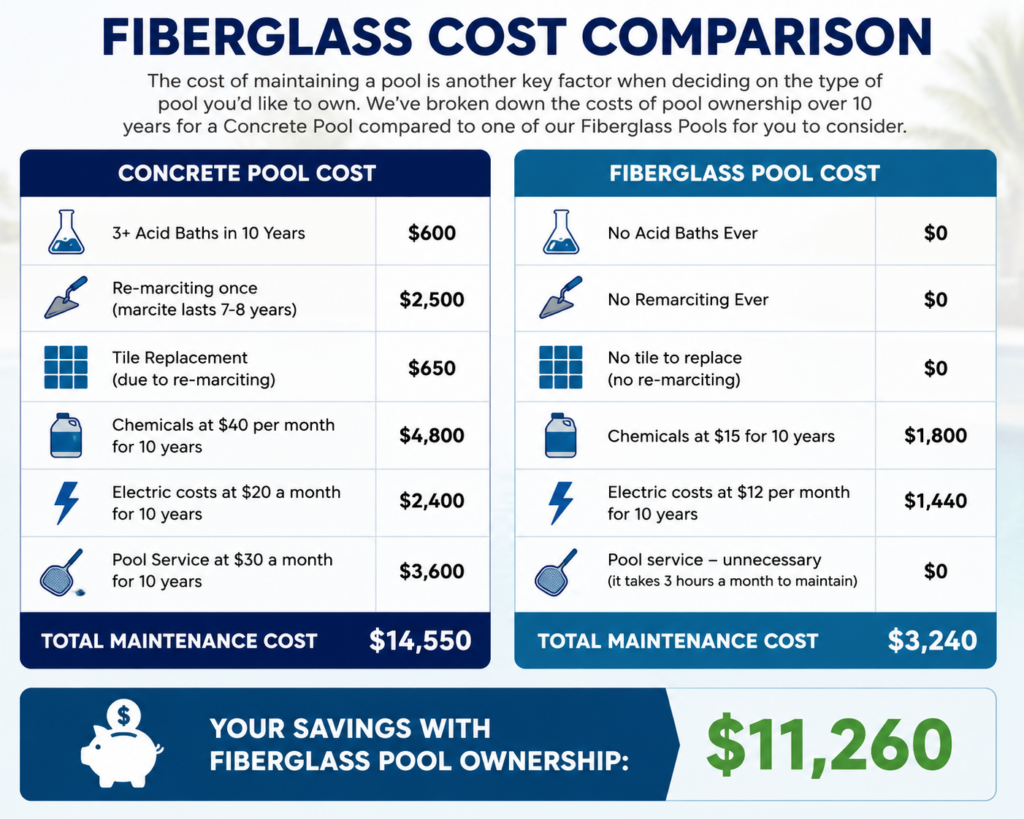
Cost & Maintenance Comparison
When comparing pool types, many homeowners focus only on the initial installation cost. Vinyl pools typically cost less upfront, fiberglass falls in the middle, and concrete is usually the highest investment initially.
Long-term ownership tells a different story:
Vinyl pools require liner replacements over time
Concrete pools require resurfacing and higher maintenance costs
Fiberglass pools offer lower chemical use, minimal maintenance, and no resurfacing requirements
Why Fiberglass Makes the Most Sense
Owning a pool should be about relaxing, swimming, and spending time with family — not constant maintenance and repairs. Fiberglass pools offer one of the best combinations of durability, comfort, low maintenance, and long-term value.
With modern designs, premium finishes, built-in features, and fast installation, fiberglass pools continue to be one of the most practical and popular choices for homeowners looking to create a backyard designed for enjoyment, not frustration.
Next Steps
A pool is a major investment, but choosing the right material can make ownership far more enjoyable in the long run. Explore available designs, finishes, and features to find the fiberglass pool that best fits your backyard, lifestyle, and long-term goals.
A swimming pool is a great way to relax, stay active, and enjoy time with family and friends. Along with the benefits of pool ownership comes an important responsibility: making sure your investment is properly protected with the right insurance coverage.
Because homeowners insurance policies can vary significantly, understanding what is — and isn’t — covered when it comes to swimming pools is important for every homeowner.
Does Homeowners Insurance Cover Swimming Pools?
In many cases, homeowners insurance policies provide some level of coverage for swimming pools. However, the amount and type of protection can vary depending on your policy, the type of pool, and how the pool is classified on your property.
Some insurance policies may include swimming pools under general property coverage, while others may require additional protection or specific endorsements. Reviewing your policy carefully or speaking directly with your insurance provider can help clarify your coverage limits and exclusions.
How Swimming Pools May Be Covered
Swimming pools are commonly covered in one of several ways under homeowners insurance policies:
Personal Property Coverage
If a pool is considered personal property — such as many above-ground pools — it may fall under personal property coverage. This type of coverage can help protect against certain events like fire, theft, or storm damage. However, personal property coverage often comes with lower limits and may not fully cover larger claims.
Other Structures Coverage
In-ground pools or pools considered permanent structures are often covered under “other structures” coverage. This portion of a homeowners insurance policy is designed to protect detached structures on your property, including fences, sheds, and certain outdoor installations.
Coverage limits and exclusions can vary, so it’s important to confirm exactly how your policy treats swimming pools.
Dwelling Coverage
In some cases, pools attached directly to the home — such as indoor pools — may fall under dwelling coverage. Dwelling coverage generally protects the primary structure of the home and attached features from covered damages. This type of coverage is less common for outdoor pools but may apply in specific situations.
Do You Need Additional Insurance for a Pool?
Many homeowners choose to increase their liability coverage after installing a swimming pool. Pools can increase the risk of injuries or accidents, and additional liability protection may help cover:
Medical expenses
Property damage claims
Legal costs
Lawsuits related to pool accidents
Some homeowners also add specialized pool endorsements or umbrella policies for additional peace of mind and broader protection.
Protecting Your Pool Investment
A swimming pool is a major investment, and proper insurance coverage is only one part of protecting it long term. Regular maintenance, safe operation, and professional service all play an important role in preserving your pool and avoiding costly issues down the road.
Understanding your insurance options can help you enjoy your pool with greater confidence, knowing your investment is protected for years to come.