
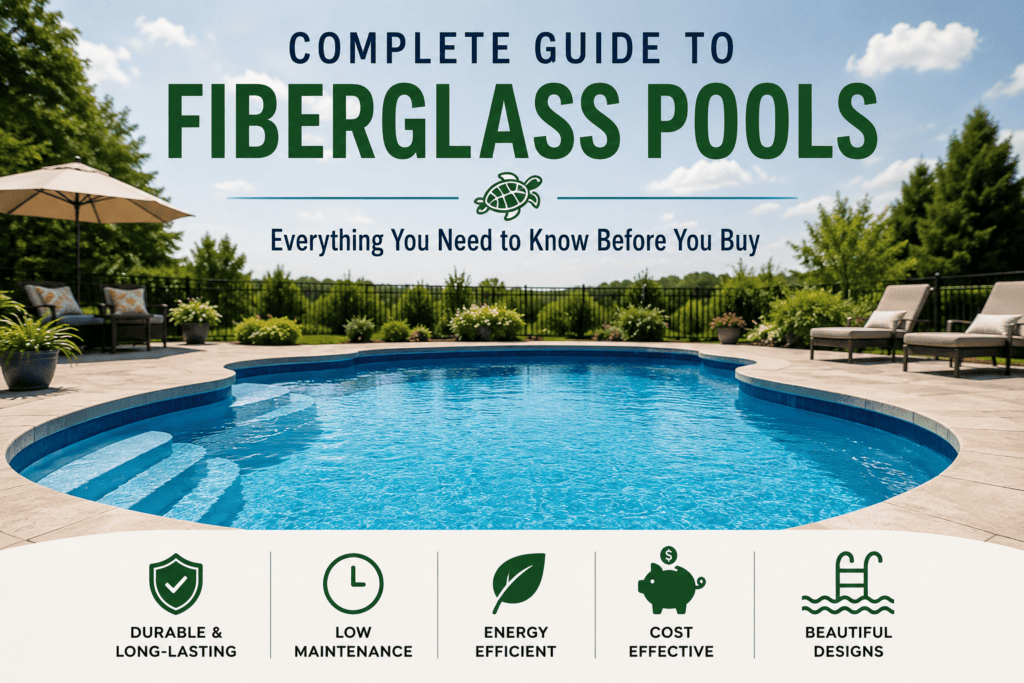
A backyard pool can sound like a straightforward purchase—right up until the first full-service builder quote arrives.
Turnkey proposals often combine the pool shell, equipment, labor, excavation, project management, overhead, and contractor markup into one large number. For homeowners who want more control over those costs, purchasing a USA-made fiberglass pool kit can offer a more flexible path.
Instead of committing to one company for the entire project, you can purchase the pool shell and equipment package separately, then coordinate installation with qualified contractors in your area. This approach is not right for every homeowner, but it can make sense for buyers who are willing to plan carefully and manage more of the process.
Pool Shell Pros supplies fiberglass pool shells nationwide.
The goal is not to move through the project at turtle speed. The goal is to move carefully enough to avoid expensive surprises.
A Quick Look at Fiberglass Pool Kits
A fiberglass pool kit generally centers on a factory-manufactured pool shell. Depending on the supplier and package selected, it may also include some or all of the circulation and sanitation equipment needed to operate the pool.
Homeowners often consider this purchasing method because it may provide:
- Greater visibility into product and equipment costs
- Freedom to compare local contractor bids
- More control over optional upgrades
- A potentially shorter construction process than concrete
- The ability to manage selected portions of the project independently
However, the advertised kit price is only one part of the total investment. Excavation, site access, installation labor, drainage, electrical work, permits, water, decking, and fencing can all affect the final cost.
Why Factory-Manufactured Fiberglass Appeals to Buyers
Fiberglass pools are produced in a controlled manufacturing environment and delivered to the property as a completed shell.
That is fundamentally different from a concrete pool, which must be formed and finished at the job site. Because the fiberglass structure is already built, the on-site phase can often progress more quickly once the property is prepared.
A faster installation is not guaranteed. Project timing can still be affected by:
- Permit approvals
- Contractor availability
- Weather conditions
- Excavation difficulties
- Groundwater
- Yard access
- Electrical inspections
- Decking and landscaping schedules
Even with those variables, fiberglass is frequently attractive to homeowners who want to avoid a lengthy on-site pool construction process.
Some buyers also prefer a pool manufactured in the United States. Their reasons may include easier communication, domestic warranty administration, clearer product documentation, or confidence in the manufacturing process.
The country of manufacture alone does not guarantee that one shell is superior to another. Buyers should still evaluate the manufacturer, construction method, warranty terms, specifications, dealer support, and reputation.
What May Be Included in a Fiberglass Pool Package
The term “pool kit” can mean very different things from one seller to another.
A basic offer may include little more than the fiberglass shell. A broader equipment package could include several components required for circulation, sanitation, and lighting.
Common package components may include:
- Fiberglass swimming pool shell
- Pump
- Filter
- Skimmer
- Return fittings
- Basic plumbing materials
- LED pool light
- Saltwater chlorination system
- Cleaner
- Equipment controls or automation
Do not assume an item is included simply because it appears in a product photograph or marketing example. Ask for a written list showing every component in the quote.
You should also confirm whether the package includes freight, delivery accessories, unloading requirements, documentation, and technical information.
Compare the Entire Package, Not the Headline Price
A low advertised price can be appealing, but it may not represent the best overall value.
For example, a lower-priced package may require you to purchase the pump, filter, sanitation system, lighting, plumbing components, and accessories separately. Once those items are added, the difference between competing quotes may shrink considerably.
When reviewing a package, compare:
- Shell model and dimensions
- Pool depth and water capacity
- Included equipment
- Equipment brands and model numbers
- Plumbing components
- Lighting
- Sanitation system
- Freight or delivery charges
- Warranty coverage
- Technical documentation
- Customer support
- Upgrade pricing
A quote should make it reasonably clear what you are buying and what remains your responsibility.
🐢 Turtle Tip: Read the equipment list before comparing totals. The least expensive package can become the most expensive option once missing components are added.
Fiberglass, Vinyl Liner, and Concrete Pools Compared
No pool construction type is the correct answer for every yard. Fiberglass, vinyl liner, and concrete pools each serve different priorities.
| Consideration | Fiberglass | Vinyl Liner | Concrete |
|---|---|---|---|
| On-site construction time | Usually shorter | Moderate | Usually longest |
| Shape flexibility | Limited to available molds | Highly flexible | Highly customizable |
| Surface texture | Smooth | Smooth | Depends on finish |
| Routine maintenance | Generally lower | Moderate | Generally higher |
| Future surface work | May require specialized repair | Liner replacement | Resurfacing may be needed |
| Initial project cost | Varies by model and site | Often competitive | Frequently higher |
| Delivery method | One-piece shell | Components assembled on site | Constructed on site |
These are broad comparisons. Actual pricing, maintenance, and installation time depend on the specific product, property, contractor, climate, and local market.
When Fiberglass Has a Clear Advantage
The Shell Arrives Already Formed
The main fiberglass structure does not need to be built in the backyard. Once the site is excavated and properly prepared, the shell can be placed and the installation process can continue.
This can eliminate several construction stages associated with concrete pools.
The Surface Is Smooth
Fiberglass has a smooth, non-abrasive surface. Many homeowners find it comfortable for swimming and easier to clean than rougher pool finishes.
A smoother surface may also make it more difficult for algae to attach than on porous or textured materials. Proper circulation, sanitation, brushing, and water chemistry are still necessary.
Buyers Can Separate Product and Labor Decisions
Purchasing the shell separately allows buyers to compare product costs independently from local installation costs.
That can provide more flexibility when selecting:
- Excavation contractors
- Pool installers
- Electricians
- Concrete or decking contractors
- Fence contractors
- Landscapers
It also gives the homeowner more responsibility. Coordinating multiple trades requires organization, communication, and a clear understanding of who is responsible for each stage.
Many Designs Include Built-In Features
Depending on the mold, a fiberglass shell may include:
- Entry steps
- Benches
- Tanning ledges
- Safety ledges
- Integrated seating
- Multiple depth profiles
These features are formed into the shell and do not usually need to be constructed separately at the property.
Situations Where Fiberglass May Not Be the Best Choice
Fiberglass has practical limitations that should be evaluated before ordering.
You Must Choose an Existing Mold
Fiberglass pools are produced from molds. You can choose from available models, but you cannot freely redraw the pool’s dimensions or shape in the same way you might with a custom concrete design.
Buyers who require unusual dimensions, highly specific depths, or a one-of-a-kind layout may prefer another construction method.
Delivery Access Must Be Confirmed
The shell is delivered in one piece. It must be transported to the property and moved into position.
Potential access problems include:
- Narrow roads
- Tight driveways
- Limited backyard access
- Buildings close to the property line
- Mature trees
- Utility lines
- Fences
- Steep grades
- Septic systems
- Restricted crane access
Do not order a shell before confirming that delivery and placement are practical.
Ground Conditions Can Change the Project
Soil stability, groundwater, drainage, frost, and grading can materially affect installation.
These are site-specific construction issues. They should be reviewed by qualified local professionals familiar with your region and property conditions.
Project Management Falls on the Buyer
A full-service builder generally manages the construction schedule and subcontractors. When purchasing direct, the homeowner may take on some or all of that coordination.
That arrangement can provide savings and flexibility, but it also requires careful planning.
Fiberglass or Vinyl Liner: Which Is the Better Fit?
Fiberglass and vinyl liner pools are both common choices for homeowners who do not want a custom concrete pool.
Fiberglass may appeal more to buyers who prioritize:
- A factory-finished shell
- A smooth surface
- Lower routine maintenance
- A shorter potential installation schedule
- Built-in steps and seating
- Long-term ownership without periodic liner replacement
Vinyl liner pools may be more suitable for buyers who prioritize:
- Greater flexibility in pool shape
- More freedom in dimensions
- A potentially lower initial project price
- A wide selection of liner colors and patterns
- A design that can be adapted to certain site conditions
A vinyl liner is a replaceable component and will not last indefinitely. Replacement timing and cost should be included in the long-term ownership comparison.
The decision should be based on the property, budget, design goals, installer availability, and the homeowner’s maintenance expectations—not simply on which pool type receives the most enthusiastic sales pitch.
Costs Beyond the Pool Shell
A realistic pool budget should include much more than the product package.
Potential additional expenses include:
- Excavation
- Soil removal
- Stone or approved backfill
- Crane service or specialized placement equipment
- Plumbing labor
- Electrical service
- Bonding
- Permits
- Engineering, when required
- Water
- Drainage improvements
- Concrete decking or patio construction
- Retaining walls
- Fencing and gates
- Landscaping
- Final grading
- Inspections
- Contractor travel or mobilization
Some properties require only straightforward preparation. Others involve challenging access, unstable soil, groundwater, slopes, or extensive hardscaping.
A responsible budget includes a contingency for conditions that may not be obvious before excavation begins.
Questions to Ask Before Ordering
Before purchasing a fiberglass pool kit, obtain clear answers to the following questions.
What exactly is included?
Request an itemized list of the shell, equipment, fittings, plumbing materials, accessories, freight, and documentation.
What is not included?
Clarify which installation materials and services must be purchased locally.
How will the shell be delivered?
Ask about the delivery process, site access, unloading responsibilities, scheduling, and any equipment needed when the truck arrives.
What are the shell dimensions?
Confirm the exterior dimensions, not only the swimming-area dimensions. Delivery planning and excavation depend on accurate measurements.
What equipment brands and models are provided?
Generic descriptions such as “pump and filter included” are not enough for a meaningful comparison.
What warranty applies?
Read the written warranty. Review coverage, exclusions, claim procedures, transferability, and homeowner responsibilities.
What local approvals are required?
Contact the local building department before ordering. Requirements vary by city, county, and state.
Who will perform the installation?
Choose qualified local professionals and clearly define the scope of each contractor’s work.
Who Is a Good Candidate for Buying Direct?
A direct-purchase fiberglass pool may be a reasonable fit for a homeowner who:
- Wants greater control over the project budget
- Is comfortable comparing contractors
- Has confirmed suitable yard access
- Understands that installation is separate
- Is willing to coordinate local trades
- Wants a fiberglass model available in an existing mold
- Has researched permits and site conditions
- Prefers to choose equipment instead of accepting a fixed builder package
It may be less suitable for someone who wants one company to assume responsibility for every stage from design through final landscaping.
Neither approach is inherently better. They provide different levels of convenience, control, responsibility, and cost transparency.
Frequently Asked Questions
Does Pool Shell Pros install fiberglass pools?
No. Pool Shell Pros supplies fiberglass pool shells and related product packages nationwide. Installation, excavation, electrical work, permitting, decking, fencing, and other local services must be arranged separately.
Can buying a fiberglass pool kit reduce the total project cost?
It may. Buying directly can give homeowners more control over product selection, equipment, contractor bids, and project management costs. Savings are not guaranteed because site conditions and local labor costs vary.
How quickly can a fiberglass pool be installed?
Fiberglass installation can often move faster than concrete pool construction because the shell arrives preformed. The actual schedule depends on permits, access, weather, excavation, contractors, inspections, equipment, and surrounding construction.
Can a homeowner install the pool without a professional?
Some experienced homeowners manage portions of a pool project, but installation involves excavation, grading, drainage, plumbing, electrical work, bonding, backfilling, and code compliance. Qualified local professionals should be used where required by law or where the work exceeds the homeowner’s experience.
Are fiberglass pools made in the United States automatically higher quality?
Not automatically. Manufacturing location is only one consideration. Buyers should review construction specifications, manufacturer history, quality controls, warranty terms, documentation, and support.
Does a fiberglass pool require less maintenance than concrete?
Fiberglass is generally regarded as easier to maintain because of its smooth surface. All swimming pools still require proper filtration, circulation, sanitation, water testing, cleaning, and seasonal care.
Can any fiberglass shell be delivered to any property?
No. Access must be evaluated before purchase. Road restrictions, bridges, gates, utility lines, trees, buildings, slopes, and available placement equipment can affect whether a particular shell can reach the installation area.
Is the cheapest fiberglass package usually the best deal?
Not necessarily. A lower quote may exclude important equipment, freight, accessories, plumbing components, or support. Compare complete package value rather than the starting price alone.
Take the Next Step Carefully
Choosing a pool is not only about selecting a shape that looks good in a photograph. It is a construction project involving product selection, transportation, site conditions, contractors, permits, equipment, and long-term maintenance.
A USA-made fiberglass pool kit may offer an effective balance of speed, durability, flexibility, and cost control for the right property. The strongest results usually come from buyers who confirm the full project requirements before placing an order.
Pool Shell Pros supplies builder-grade fiberglass pool shells nationwide. Our team can help you review available models, dimensions, equipment packages, and delivery considerations.
Installation is not included and must be arranged with qualified professionals in your area.
Take the project one deliberate step at a time. Turtles may be slow, but they rarely order a pool shell before checking the gate width.